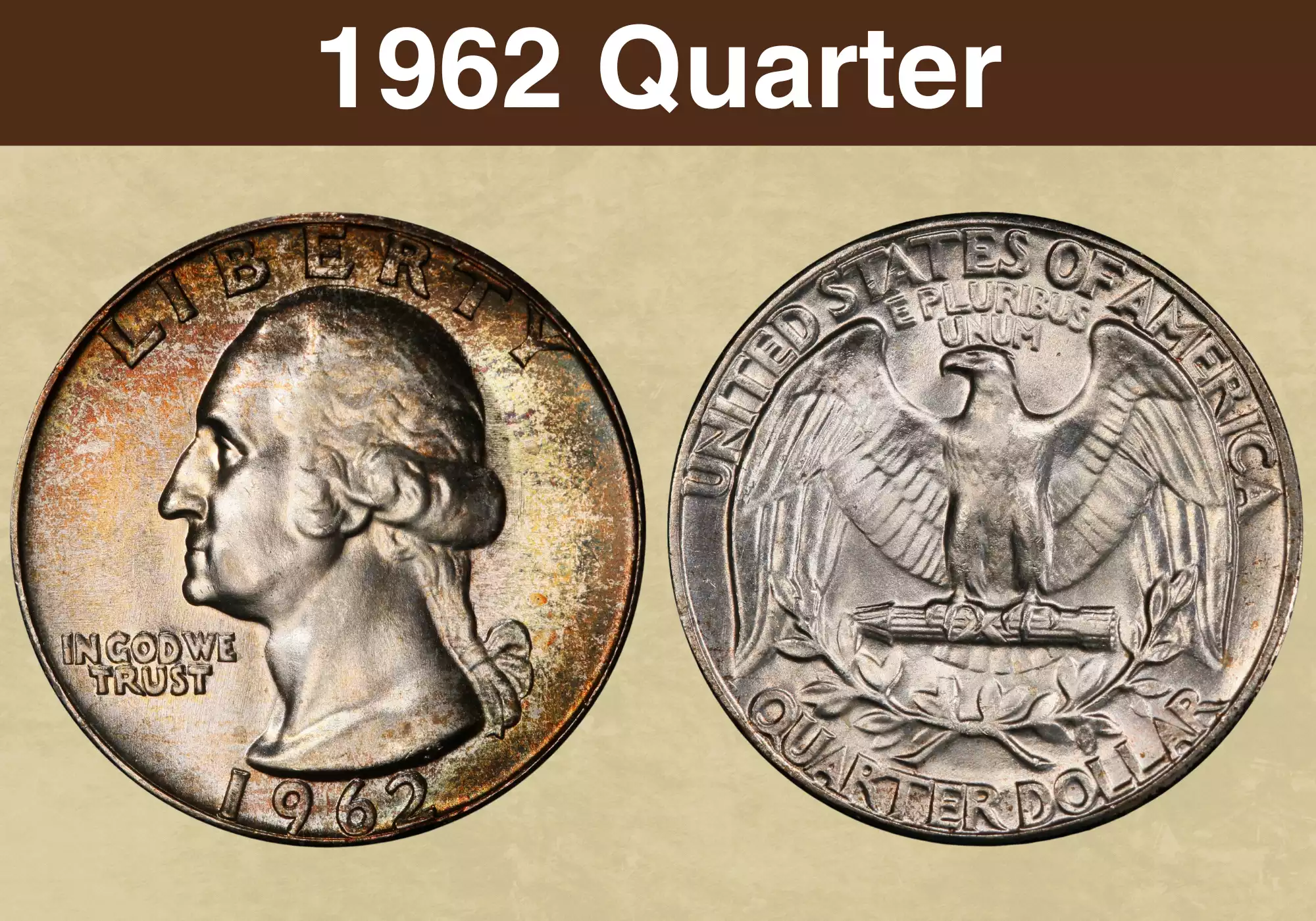
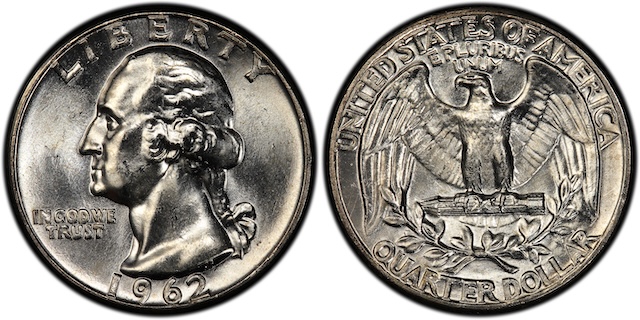
1962 Washington Silver Quarter

1962 Quarter Value: What Is Your Silver Quarter Worth?

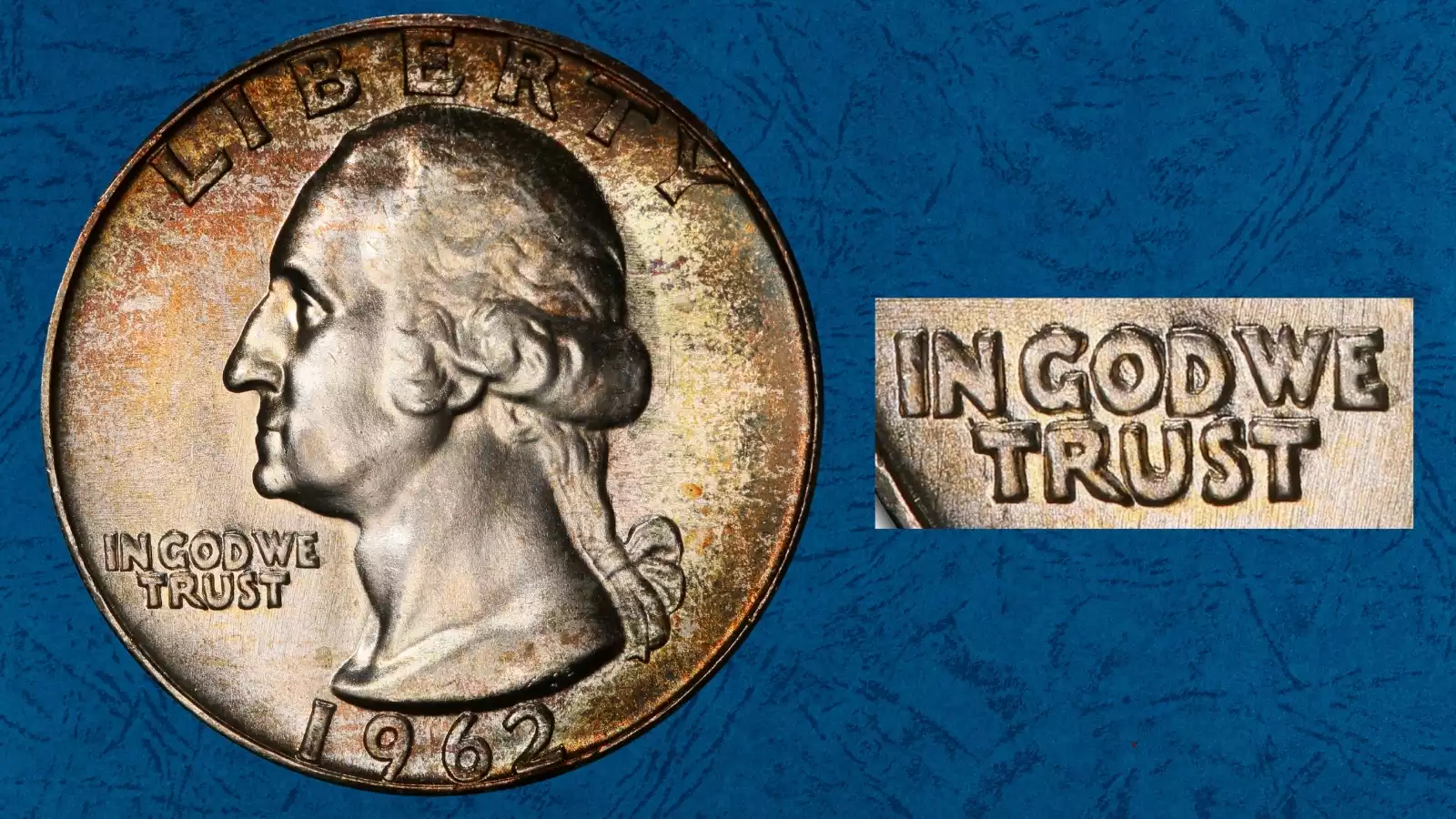
One 1962 Washington quarter sold for $26,400 at Heritage Auctions — graded PCGS MS-67+ with rainbow toning. Most circulated examples are worth $9–$13 for their silver content alone. The difference? Condition, mint mark, and knowing the right error varieties. Use the free tools below to find out exactly where yours falls.

★★★★★ 4.8 / 5 · Trusted by 1,847 collectors
Check My 1962 Quarter Value →
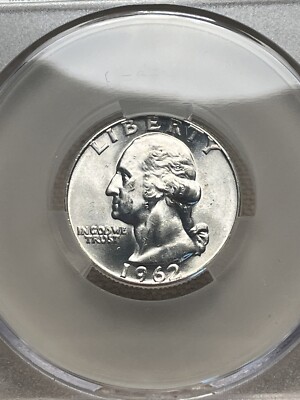
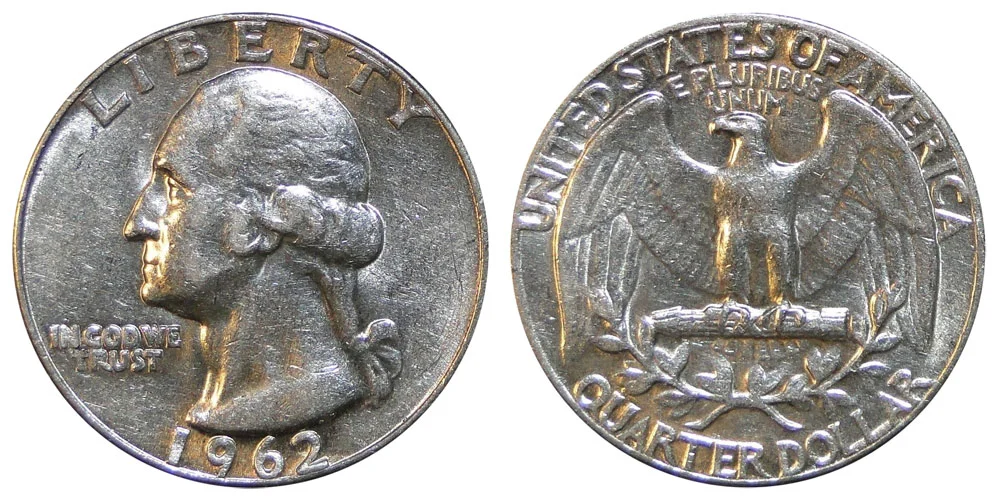
1962 Washington silver quarter obverse and reverse showing John Flanagan portrait and eagle design
$26,400
Top auction record (PCGS MS-67+, Heritage 2019)
166.9M
Total 1962 quarters struck across all mints
0.18084
Troy oz pure silver in every 1962 quarter
$3,290
DDO FS-101 auction record (PCGS MS-66+, Heritage 2016)

Free Tool

1962 Quarter Value Calculator

Select your mint mark, condition, and any errors you've spotted. The calculator uses real auction data to estimate your coin's value.

Step 1 — Mint Mark
Step 2 — Condition
Step 3 — Errors / Varieties (check all that apply)

If you're not yet sure of your coin's mint mark or condition, there's a 1962 Quarter Coin Value Checker that lets you upload photos for a quick AI-based estimate before you use this tool.

AI-Style Analysis

Describe Your Coin for a Detailed Assessment

Type what you see on your 1962 quarter — color, marks, lettering oddities, mint mark details — and we'll analyze it against known varieties and grading criteria.

Mention these things if you can:
  • Mint mark (D, none, or Proof)
  • Overall color (bright silver, toned, dark)
  • Visible wear on Washington's cheek/hair
  • Any doubling on eye, ear, or lettering
  • Spacing oddities in STATES on reverse
Also helpful:
  • Luster quality (dull, medium, bright)
  • Contact marks or scratches present
  • Rainbow or dark natural toning
  • Any missing portion of the design
  • Whether date is complete

Skipped the calculator?

Go back and enter your mint mark and condition — it only takes 30 seconds to get a real value estimate.

Use the Free Calculator →

Signature Variety Identifier

1962 DDO FS-101 Self-Checker

The Doubled Die Obverse (DDO FS-101, PCGS #517993) is the most sought-after 1962 quarter variety. Use this tool to determine if your coin might be one.

Side-by-side comparison of common 1962 quarter obverse versus the DDO FS-101 doubled die variety showing doubling on Washington's eye and LIBERTY lettering
Common — Standard Die

Normal 1962 Quarter

Washington's eye appears as a single, sharp, well-defined line. The lettering LIBERTY shows crisp, clean edges with no secondary images. Under a 10× loupe, each letter has one clean border.

Rare — DDO FS-101

Doubled Die Obverse

Washington's eye and ear show a visible ghost or shadow offset slightly from the primary design. LIBERTY and IN GOD WE TRUST lettering may appear doubled or notched. The effect is consistent across all coins struck from this die.

Check Your Coin — 4 Diagnostic Questions

Quick Reference

1962 Quarter Value Chart at a Glance

Values below reflect current market ranges based on PCGS auction data and dealer pricing. For a full illustrated step-by-step 1962 Washington quarter identification breakdown, check that dedicated resource alongside this chart. Circulated coins always carry at least the silver melt floor.

Variety / Issue Worn (G–F) Circulated (XF–AU) Uncirculated (MS-60–65) Gem (MS-66+)
1962-P (Philadelphia) $9–$11 $11–$14 $14–$40 $38–$5,040+
1962-D (Denver) $9–$11 $11–$14 $14–$32 $49–$18,400+
1962 Proof (Standard) $12–$25 $25–$35
1962 Proof Cameo $13–$35 $35–$80
1962 Proof Deep Cameo $16–$100 $100–$765+
🌟 DDO FS-101 (Philadelphia) $50–$100 $100–$200 $200–$365 $365–$3,290+
Type B Reverse FS-901 $10–$22 $22–$45 $45–$150 $150–$568+
🔴 1962-D/D RPM FS-501 $20–$50 $60–$100 $120–$200 $200–$495+
Off-Center Strike $20–$50 $50–$150 $150–$300+ $300+
Clipped Planchet $50–$100 $100–$150 $150–$300+ $300+

🌟 = DDO FS-101 signature variety  |  🔴 = Rarest regular variety (1962-D MS-67 condition rarity)

📱 CoinKnow is a fast on-the-go way to cross-reference coin values and identify potential varieties by denomination and year — a coin identifier and value app.

Deep Dive

The Valuable 1962 Quarter Errors: Complete Guide

The 1962 Washington quarter was produced during the final years of U.S. 90% silver coinage, and mint production pressures created several notable error varieties. Each card below covers what makes the error real, how to spot it, and what the market currently pays. Variety attribution references CONECA numbering and PCGS catalog designations throughout.

1962 quarter DDO FS-101 doubled die obverse showing doubling on Washington's eye and LIBERTY lettering

1962 Quarter Doubled Die Obverse (DDO FS-101)

MOST FAMOUS $50 – $3,290+

The DDO FS-101 occurred during the hub-to-die transfer process when the working die received a second hub impression at a slightly different rotational angle. This is a true doubled die — not a mechanical or machine doubling — meaning every coin struck from that die carries the same diagnostic doubling, making the variety consistently attributable and collectible.

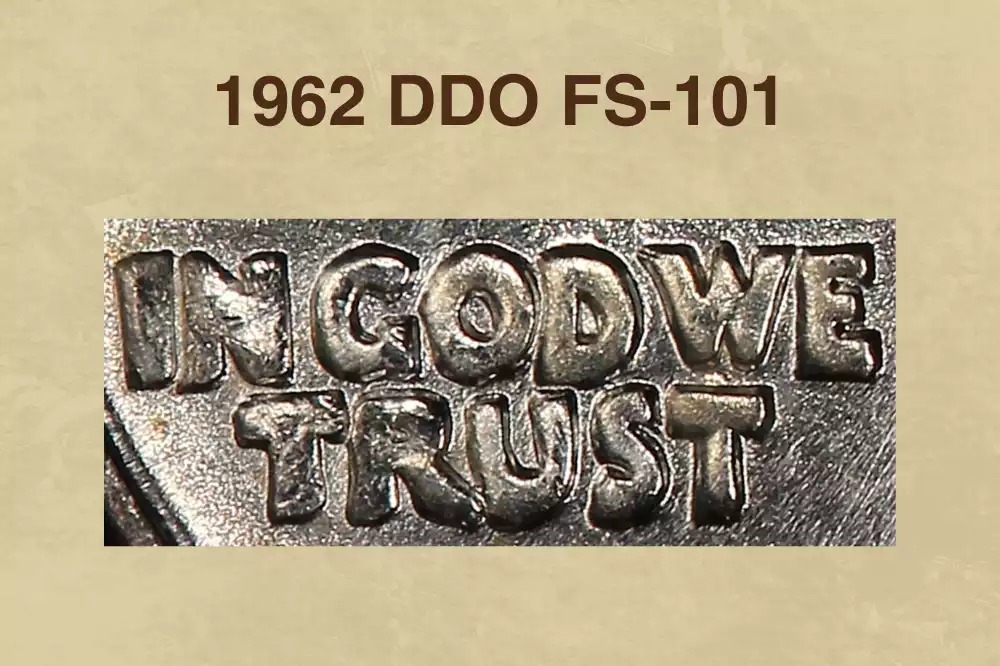
Under a 10× loupe, the doubling is most visible on Washington's eye and ear, and on the obverse lettering of LIBERTY and IN GOD WE TRUST. The secondary impression is offset, not simply a flat shelf or smear — this distinction separates the FS-101 from ordinary strike doubling, which has no collector premium.

Collectors prize this variety because it carries PCGS catalog designation #517993 and CONECA attribution FS-101, making authentication straightforward. Circulated examples sell in the $50–$200 range, gem uncirculated coins at MS-65 have sold between $362 and $445 at GreatCollections, and the record PCGS MS-66+ example realized $3,290 at Heritage Auctions in July 2016.

How to spot it

Use a 10× loupe and examine Washington's eye and the word LIBERTY. A genuine DDO shows a second, distinct offset impression — not a flat shelf. The ear and motto text may also show consistent doubling. Rotate under direct light to distinguish from bag marks.

Mint mark

Philadelphia only (no mint mark). The DDO FS-101 is not known to exist on Denver mint strikes from 1962.

Notable

Catalogued as PCGS #517993, attributed FS-101 by CONECA. Heritage Auctions realized $3,290 for a PCGS MS-66+ example (July 2016). GreatCollections has handled 21+ examples over 15 years with prices ranging from $51 to $445 in grades through MS-65.

1962 quarter Type B Reverse FS-901 showing wider spacing between E and S in the word STATES on the eagle reverse

1962 Type B Reverse (FS-901)

BEST KEPT SECRET $10 – $568+

The Type B Reverse (FS-901) is a die variety arising from the use of a reverse hub die where the spacing between the letters "E" and "S" in UNITED STATES is measurably wider than on the standard Type 1 business-strike die. This wider-spaced reverse was the normal design used for proof coinage, but on a handful of occasions the mint fed proof-type dies into the business-strike production run when regular dies ran short.

To identify the Type B Reverse, examine the word STATES on the eagle reverse under a loupe. On the Type 1 standard die, the E and S nearly touch; on the Type B die, there is a visible gap between the two letters. The distinction is subtle but consistent across all coins struck from the FS-901 die and is the same feature used to distinguish proof reverses from business-strike reverses in adjacent years.

This variety is catalogued at PCGS as #146070 and is a genuinely collectible attribution with an active secondary market. GreatCollections has sold 56+ examples over 15 years, with prices from $10 to $568 depending on grade and eye appeal. MS-66 examples have sold for around $348 at GreatCollections, and Greysheet CPG values range from $80 to $405 in mint state grades.

How to spot it

On the reverse, locate the word STATES near the top of the eagle. Under a 5× to 10× loupe, compare the gap between the E and S. If a visible space separates them (wider than the letters on either side), you have the Type B Reverse. The standard die has near-touching letters.

Mint mark

Philadelphia only (no mint mark). Proof-style dies were occasionally pulled into Philadelphia business-strike presses; no Denver Type B Reverse is attributed for 1962.

Notable

Catalogued PCGS #146070, attributed FS-901. GreatCollections has processed 56+ sales over 15 years ($10–$568 range). Greysheet CPG values run $80–$405 in MS grades. Four examples have received CAC approval, indicating above-average quality for the grade assigned.

1962-D quarter RPM FS-501 repunched mint mark showing secondary D shadow below or beside the primary D mint mark

1962-D Repunched Mint Mark (RPM FS-501)

RAREST $20 – $495+

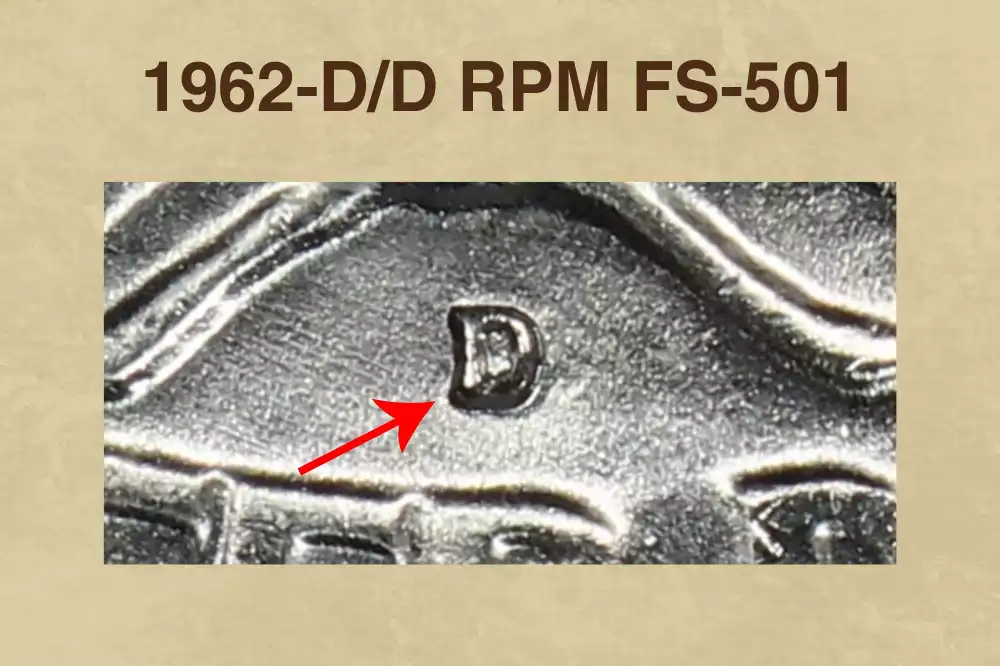
The RPM FS-501 is a die variety unique to the Denver mint where the hand-punched "D" mint mark was applied twice to the working die at slightly different positions. Prior to 1990, mint marks were physically punched into working dies after they received their design hub impression — a manual process that occasionally resulted in a second punch that didn't perfectly align with the first, leaving a secondary "D" impression partially visible around the primary mark.

To identify the FS-501, examine the D mint mark on the reverse under a 10× loupe. A second, partial D will be visible as a "shadow" displaced slightly below, north, or to one side of the primary D. The displacement is small but consistent on all coins struck from this die — it will not appear as a random scratch or die chip. The secondary D shows the same serifs and stroke weight as the primary mark.

This variety is the condition rarity within the 1962-D series. Despite the massive 127.5 million mintage, the 1962-D is one of numismatics' great condition rarities at the MS-67 level — only two coins have been graded PCGS MS-67, one of which sold for $18,400 in 2012. The RPM FS-501 adds an additional premium in any grade; an MS-65 example documented on eBay in August 2021 sold for $495, establishing a concrete market benchmark confirmed by multiple price guide sources.
How to spot it

Under a 10× or stronger loupe, focus on the D mint mark on the reverse (below the eagle, above QUARTER DOLLAR). Look for a secondary "shadow" D offset from the primary mark. The partial secondary letter shows the same stroke weight — not a die scratch or gouge. Consistent placement across all RPM FS-501 coins.

Mint mark

D (Denver) only. The FS-501 RPM exists exclusively on Denver mint 1962 quarters; no Philadelphia equivalent is attributed.

Notable

Attributed as RPM FS-501. An MS-65 example sold for $495 on eBay in August 2021 per coins-value.com documentation. Greysheet CPG for the base 1962-D at MS-67 reaches $2,700; the "George's Army" 1962-D MS-67 sold for $18,400 at Heritage in April 2012, reflecting the extreme condition rarity at this grade level.

1962 quarter off-center strike error showing design shifted to one side with blank crescent and full date visible

1962 Quarter Off-Center Strike

MOST VALUABLE ERROR $20 – $300+

An off-center strike occurs when the planchet is not properly centered between the obverse and reverse dies at the moment of striking. The force of the press drives the design into only part of the planchet, leaving a blank crescent of unstruck silver on the opposite side. The further off-center the strike, the more dramatic the visual impact and the higher the collector premium.

When assessing an off-center strike, the most important factor is whether the full date remains visible. Coins struck 5–10% off center are common and command only a modest premium — the design is barely shifted. The sweet spot for collectors is 40–70% off-center with the date fully visible, creating a visually dramatic coin that can still be attributed to the 1962 date and Philadelphia or Denver mint. Strikes over 70% off-center that lose the date lose much of their attributable value.

Moderate off-center examples (20–40% off-center) with visible date trade for $50–$150 depending on condition and eye appeal. Dramatic 40–70% off-center examples with full date visible in circulated condition bring $150–$300+, and gem uncirculated off-center strikes can exceed $300 significantly. The 90% silver content of these planchets also guarantees a floor well above face value even for the most modest off-center examples.

How to spot it

Examine the coin's circumference for a smooth, unstruck crescent of silver with a plain, flat surface. The design will appear shifted toward the opposite side. Measure approximately what percentage of the coin face is blank — this determines the "percentage off center" designation used in grading.

Mint mark

Both Philadelphia (no mark) and D (Denver) issues. Off-center strikes occurred at both mints throughout 1962 production, with value determined by percentage and date visibility rather than mint origin.

Notable

Value peaks at 40–70% off-center with date fully visible — this sweet spot creates maximum collector demand. Minor 5–10% examples sell for modest premiums of $20–$40. Broadstrikes (a related type struck outside the retaining collar) achieved approximately $1,440 at auction in August 2024 per Stack's Bowers, confirming strong market for dramatic 1962 quarter strike errors.

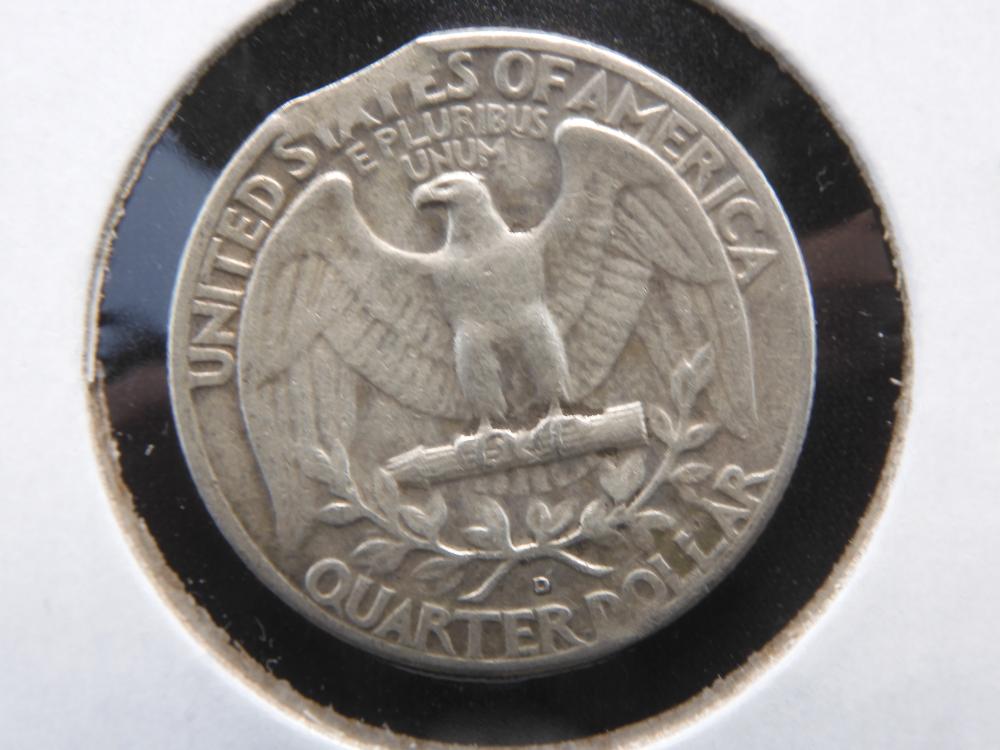
1962 quarter clipped planchet error showing curved section missing from the coin's edge where the blank was punched from overlapping metal strip

1962 Quarter Clipped Planchet

SHOWSTOPPER $50 – $300+

A clipped planchet error originates before any die contact occurs. During planchet production, a metal strip is fed through a punch press that blanks out circular coin discs. If the strip is fed incorrectly or the press punches too close to a previously punched hole, the resulting blank has a curved section missing from its edge — this is a curved clip, the most common type on 1962 quarters. Straight clips occur when the punch hits near the end of the strip.

The curved clip creates a smooth, concave arc missing from the coin's normal circular perimeter. This area shows no reeding — the edge is smooth and plain where the normal reeded edge would be. The Blakesley Effect, a diagnostic tool for genuine clip attribution, predicts that the design directly opposite the clip will show weakness or incomplete detail due to the missing metal not providing proper die pressure during the strike. Confirming the Blakesley Effect strongly supports a genuine clip attribution versus a damaged edge.

The size and location of the clip determines value. Circulated clipped planchet quarters trade for $50–$100 depending on clip size and visual appeal. Uncirculated examples with significant curves — representing 10–15% or more of the planchet — command $300+ based on the dramatic combination of error severity and preserved silver surfaces. The silver composition means even heavily worn clipped examples have bullion value well above face.

How to spot it

Run a finger around the coin's edge — a genuine clip produces a smooth concave arc with no reeding. Look directly opposite the clip for weak or incomplete design detail (Blakesley Effect). A filed or damaged edge will feel rough or sharp; a clip edge is smooth with an even concave curve matching a circle's arc.

Mint mark

Both Philadelphia (no mark) and D (Denver). Planchet errors occur at the planchet-manufacturing stage and affect both mints equally; value is driven by clip size and condition rather than mint origin.

Notable

Curved clips are most common; straight clips are less frequent but equally valued. Confirm authenticity by verifying the Blakesley Effect — design weakness directly opposite the clip. Per coins-value.com documentation, circulated examples trade at $50–$100; uncirculated examples with significant clips command $300+ based on severity and surface preservation quality.

Found one of these errors on your coin?

Run it through the calculator above to get a value estimate based on your specific mint mark, condition, and error combination.

Calculate My Coin's Value →

Production Records

1962 Quarter Mintage & Survival Data

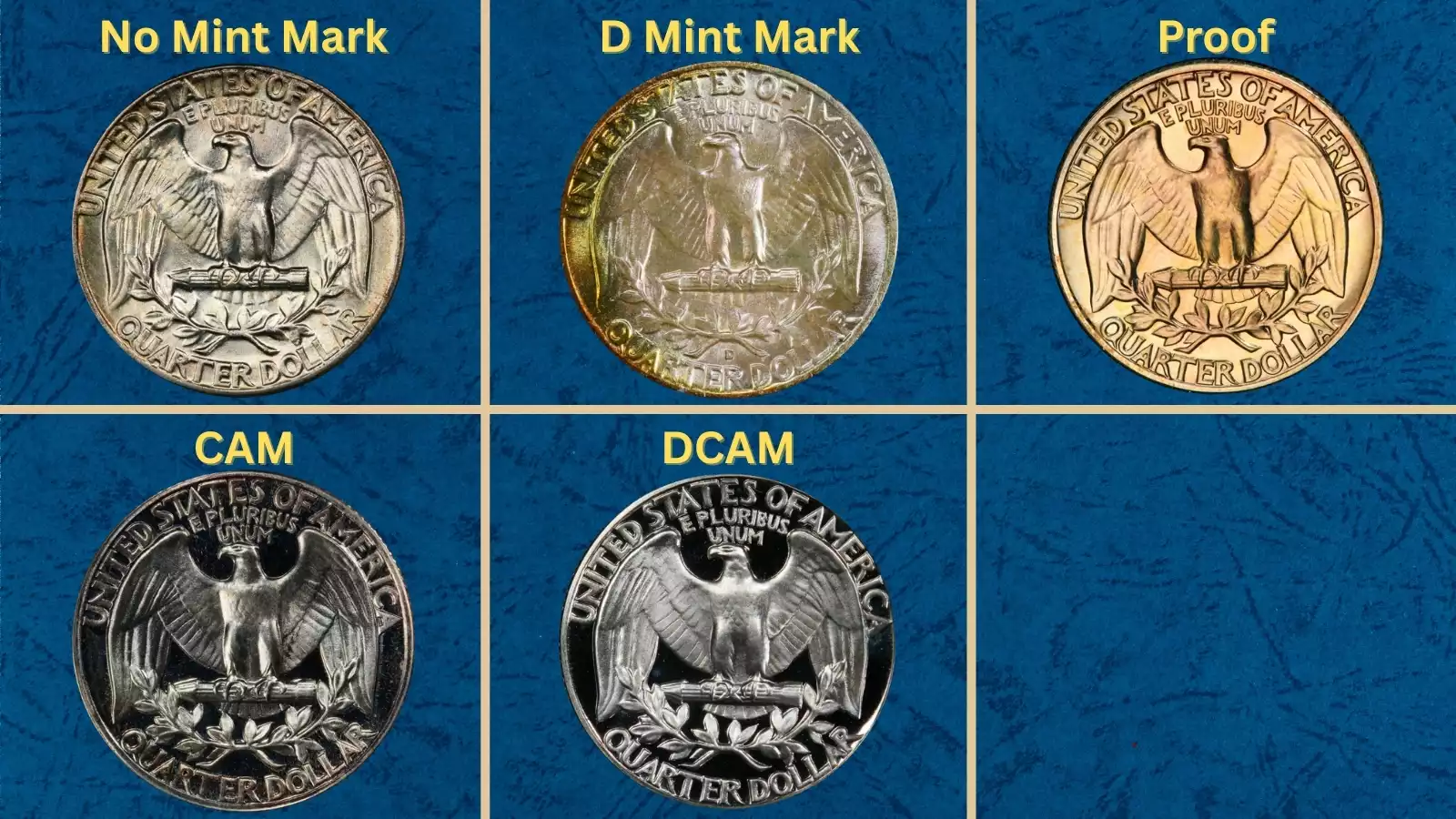
Group of 1962 Washington silver quarters representing different mint marks and condition tiers including Philadelphia, Denver, and Proof examples
Issue Mint Mintage Strike Type Condition Rarity Notes
1962-P Philadelphia (no mint mark) 36,156,000 Business strike Common through MS-65; MS-67 and MS-67+ are condition rarities. Top MS-67+ sold for $26,400 (Heritage, 2019).
1962-D Denver (D) 127,554,756 Business strike Paradoxical rarity: massive mintage but only 2 known PCGS MS-67 coins. MS-67 sold for $18,400 (Heritage, 2012).
1962 Proof Philadelphia (no mint mark) 3,218,019 Proof Common in PR-65–PR-67; Deep Cameo (DCAM) in PR-69 has sold for $312–$764 at Heritage.
Total 166,928,775 Three issues; silver composition throughout
Composition Specs: All 1962 Washington quarters are 90% silver / 10% copper · Weight: 6.25 grams · Diameter: 24.3 mm · Thickness: 1.75 mm · Edge: Reeded · Silver content: 0.18084 troy oz · Designer: John Flanagan · Series: Washington Quarters (1932–1964).

Grading Reference

How to Grade Your 1962 Washington Quarter

Grading strip showing 1962 Washington quarters in four condition tiers from worn Good grade through Gem MS-65 uncirculated
Worn (G–F)
$9–$11

Heavy wear across all high points. Washington's hair curls are flat and merged. The cheek and neck are smooth. Rim letters may be fused. Design is recognizable but flat. Worth primarily for 90% silver melt value.

Circulated (XF–AU)
$11–$14

Slight to moderate wear on Washington's cheek and the highest hair strands. Eagle breast shows wear on the feather tips. Most detail remains sharp. At AU, only a trace of luster remains in the protected recesses.

Uncirculated (MS-60–65)
$14–$40

No wear present, but contact marks, bag marks, and handling marks vary by grade. MS-60–62: numerous marks, dull luster. MS-63–64: moderate marks, decent luster. MS-65 Gem: minor marks only, full bright luster, sharp strike throughout.

Gem (MS-66+)
$38–$26,400

Exceptional preservation. MS-66: nearly mark-free with vibrant luster. MS-67: essentially perfect surfaces, sharp strike, original brilliant or toned luster. MS-67+ Philadelphia: extreme rarity (top sale $26,400). MS-67 Denver: only 2 PCGS-certified examples.

Pro Tip — Luster & Toning: On 1962 silver Washington quarters, original "cartwheel" luster flowing from the center outward is the hallmark of a high-grade coin. Denver strikes often show weaker luster due to less careful die preparation at that mint. Natural rainbow toning — especially concentric circles of red, gold, and blue — is highly prized and can add significant premiums at MS-67 and above (the $26,400 sale featured exceptional rainbow toning). Artificial toning appears flat and irregular under light rotation; professional graders spot it immediately.

🔍 CoinKnow helps you match your coin's surface details and luster against graded examples to better estimate condition before submitting for professional grading — a coin identifier and value app.

Selling Guide

Where to Sell Your Valuable 1962 Quarter

The right marketplace depends on your coin's grade and rarity. High-grade and error coins need specialist buyers; circulated silver can move anywhere quickly.

🏆

Heritage Auctions

The premier venue for exceptional examples — MS-67, MS-67+, and top-grade error coins. Heritage realized $26,400 for a 1962-P MS-67+ and $18,400 for a 1962-D MS-67. Best for coins potentially worth $500 or more. Fees apply (typically 15–20% buyer's premium) but auction competition pushes prices to true market levels.

🛒

eBay

The most liquid market for MS-60–66 coins, error varieties, and silver bullion-level examples. Browse recently sold prices for 1962 Washington quarter listings before you price your coin. Sold listings reveal real-world comps — not asking prices. Certified PCGS/NGC coins sell faster and command premiums over raw examples at every grade level.

🏪

Local Coin Shop (LCS)

Ideal for circulated silver and ungraded examples where shipping risk isn't worth it. Expect 10–20% below retail since dealers need margin. Bring multiple quotes — prices vary widely between dealers. A coin shop works best for bulk silver (worn 1962 quarters at melt) or when you need fast cash without shipping and auction wait times.

💬

Reddit (r/Coins4Sale)

Strong community for mid-range coins ($20–$200) where collector-to-collector deals happen without auction fees. The r/Coins4Sale and r/CoinSales subreddits attract knowledgeable buyers who appreciate varieties like the DDO FS-101 and RPM FS-501. Best for coins where you know what you have and want to reach someone who does too.

💎 Get It Graded First

Any 1962 quarter you suspect grades MS-66 or higher, or any coin showing the DDO FS-101, Type B Reverse, or RPM FS-501, is worth submitting to PCGS or NGC before selling. Certification fees run $20–$40 per coin depending on service tier. The premium a certified coin commands over a raw example almost always exceeds that cost — and buyers pay more when authenticity is guaranteed.

Answers

Frequently Asked Questions — 1962 Quarter Value

How much is a 1962 quarter worth?
A circulated 1962 quarter is worth roughly $9–$13 based on its 90% silver content (0.18084 oz of silver). Uncirculated examples graded MS-65 are worth $15–$40, while top-grade MS-67+ specimens have sold for as much as $26,400 at Heritage Auctions. Error varieties like the DDO FS-101 can be worth $100–$800 or more depending on grade.
Is a 1962 quarter silver?
Yes. All 1962 Washington quarters are 90% silver and 10% copper, weighing 6.25 grams with a diameter of 24.3 mm. They contain 0.18084 troy ounces of pure silver. This was three years before the U.S. Mint switched to copper-nickel clad composition in 1965. The silver melt value alone makes every 1962 quarter worth more than face value.
What does the 'D' mint mark on a 1962 quarter mean?
A small 'D' on the reverse side of your 1962 quarter (below the eagle, above QUARTER DOLLAR) means it was struck at the Denver Mint. Denver produced 127,554,756 quarters in 1962—over three times more than Philadelphia's 36,156,000. Despite the higher mintage, 1962-D quarters are paradoxically rare in high gem grades (MS-67+) due to strike quality issues and heavy handling, with only two known graded PCGS MS-67.
What is the 1962 quarter DDO error?
The 1962 Quarter Doubled Die Obverse (DDO FS-101) is a recognized variety where the working die received multiple hub impressions at slightly different angles during production. This creates visible doubling on Washington's eye, ear, and the obverse lettering. Designated FS-101 by CONECA, it is catalogued as PCGS #517993. Circulated examples trade for around $50–$200, while gem uncirculated specimens have brought $365–$480 at auction.
How do I find the mint mark on a 1962 quarter?
Turn the coin to the reverse (eagle side) and look below the eagle, centered above the lettering QUARTER DOLLAR, between the two olive branch sprigs. A 'D' there means Denver. No mint mark at all means Philadelphia—the Philadelphia Mint did not use a 'P' mint mark on quarters until 1980. You may need a 5x or 10x loupe for a clear view since the mark is small.
What is the 1962 Type B Reverse quarter?
The Type B Reverse (FS-901) is a die variety found on some 1962 Philadelphia quarters where the spacing between the 'E' and 'S' in STATES is noticeably wider than on the standard Type 1 die. These proof-style dies were occasionally used for business strikes. Catalogued as PCGS #146070, the Type B Reverse carries modest premiums and has sold at GreatCollections from $10 up to $568 depending on grade.
What 1962 quarter error is most valuable?
Among recognized varieties, the DDO FS-101 (Doubled Die Obverse) is the most prominent, with auction records reaching $3,290 for an MS-66+ example at Heritage Auctions in 2016. Among condition rarities, a perfectly preserved MS-67+ Philadelphia quarter sold for $26,400 in 2019. For mint errors, broadstrikes (struck without the retaining collar) have achieved around $1,440 at auction, and wrong-planchet errors can exceed $1,000.
How do I grade a 1962 quarter?
Inspect Washington's cheek and the hair above the ear—these areas show wear first. On the reverse, check the eagle's breast feathers and the top of its legs. Good/Fine: heavy wear, flat hair curls. Extremely Fine: slight wear on the highest points, most detail visible. MS-60–63: no wear but significant contact marks. MS-65 Gem: strong luster, only minor marks. MS-67 and above: essentially mark-free with full original luster.
Are 1962 proof quarters valuable?
The Philadelphia Mint struck 3,218,019 proof quarters in 1962. Standard proofs (PR-65 to PR-67) trade for $12–$35. The key to value is the contrast designation: Cameo (CAC) proofs add modest premiums, while Deep Cameo (DCAM) examples in PR-69 have sold for $312–$763 at Heritage Auctions. PR-70 examples are exceptionally rare. The mirror-like fields and frosted devices of high-contrast proofs are what collectors prize most.
Should I clean my 1962 quarter before selling?
Never clean a coin before selling. Cleaning removes original surface patina and luster, instantly reducing numismatic value. Professional graders at PCGS and NGC immediately identify cleaned coins and designate them 'details' or 'cleaned,' which dramatically lowers realized prices—sometimes to melt value only. An original, uncleaned 1962 quarter with natural toning will always command a higher premium than a bright, cleaned specimen in the same underlying condition.

Ready to find out what your coin's worth?

Use the free calculator — it takes under 60 seconds and uses real PCGS auction data.

Check My 1962 Quarter Value →